

My Month at the Capital: A Reflection on the
ACP Health Policy Internship
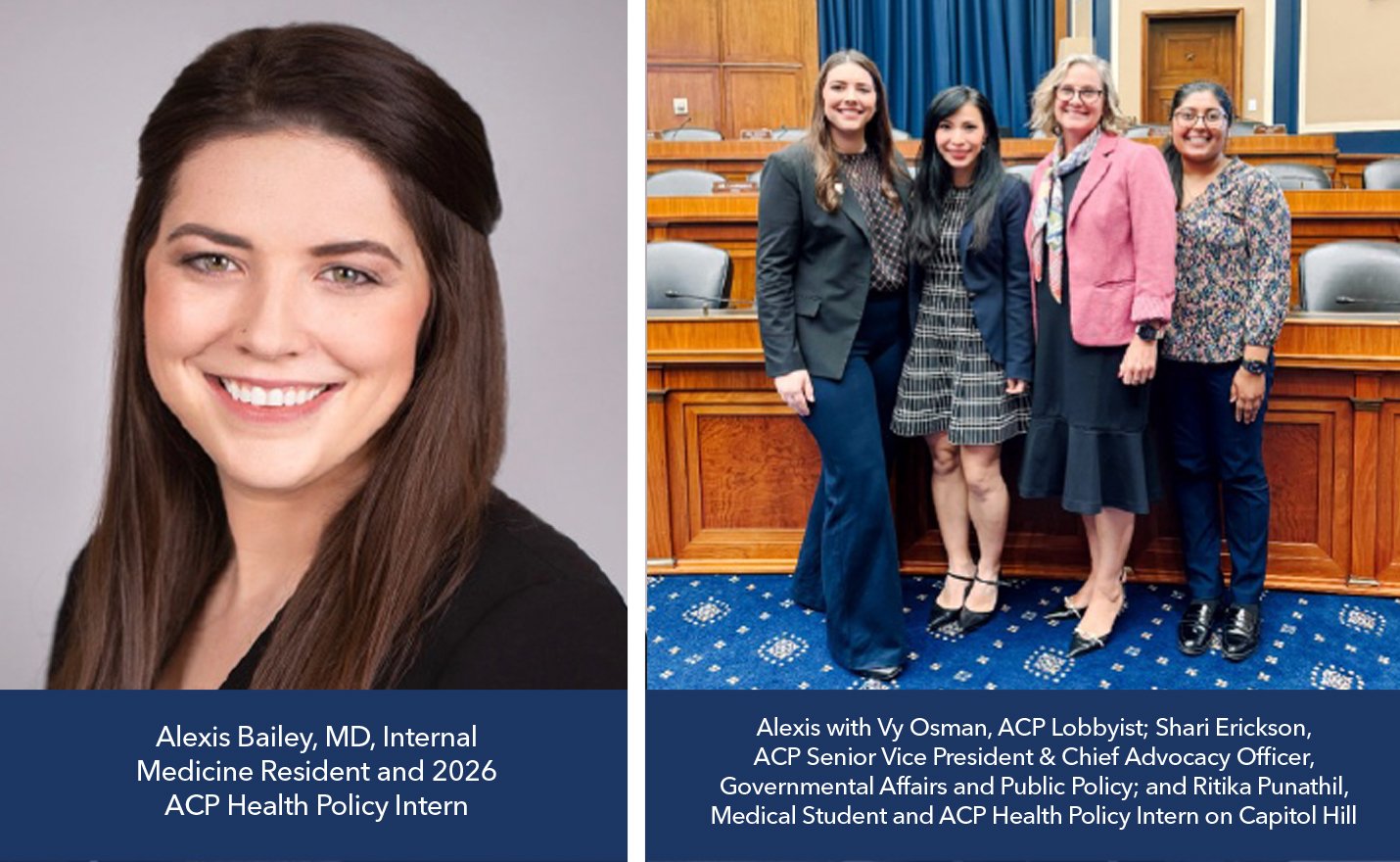
This May, I boarded a plane to Washington, D.C., filled with both eagerness and nostalgia. From 2017 to 2019, I lived in Bethesda, Maryland, while working as a postbaccalaureate fellow at the National Institutes of Health. During those two years in the Washington metropolitan area, I developed a love for the city’s energy and its passion for change. Although I returned home to Phoenix, Arizona, for medical school and residency, I always hoped I would one day return.
During my internal medicine residency, several of my mentors encouraged me to take a more active role in advocacy. I began by engaging in state-level advocacy, where I learned how physicians can help shape policies affecting their patients and profession. By the end of my second year of residency, I was encouraged to apply for the American College of Physicians’ Health Policy Internship. My flight to Washington felt like the first step toward bringing together my connection to the city, my identity as a physician, and my growing love for advocacy.
ACP’s Washington office warmly welcomed me, and I was immediately sent into action. Medical student Ritika Punathil was also completing the internship, and on our first day we met with congressional staff to discuss proposed changes to student loan policy. We drew on our own experiences as medical trainees to illustrate how these changes could affect current and future physicians. I also attended a political action committee event, where I met advocates and government affairs professionals representing physicians from a variety of specialties. Throughout the month, I attended health policy seminars, met local and national leaders across several organizations, and contributed to ACP’s health policy research. I later presented this work during a meeting of ACP’s Health and Public Policy Committee, and as I answered questions regarding our research, I felt proud of my growth over the month.
The internship culminated in ACP Leadership Day, an event I had previously attended as a participant but now understood from an entirely new perspective. I witnessed the extensive preparation required to bring physicians from across the country to Washington, equip them with a clear understanding of ACP’s legislative priorities, and prepare them to communicate effectively with members of Congress and their staff. Watching physicians arrive ready to advocate for their patients and profession demonstrated how individual voices can become significantly more powerful when organized around a common purpose.
I then joined members of the Arizona ACP chapter to advocate for ACP’s priorities on Capitol Hill. Unlike in prior years, I entered these meetings with a deeper understanding of ACP’s policy positions and the evidence supporting them. I felt better prepared to speak knowledgeably about the issues and to connect ACP’s national priorities with the experiences of physicians and patients in Arizona. And,
The experience also revealed the immense dedication of ACP’s Washington team to policy, legislative affairs, and advocacy. I came to appreciate the effort required to establish and sustain relationships with members of Congress while balancing the diverse needs and perspectives of ACP’s membership. I also gained a greater understanding of the breadth of ACP’s policy portfolio and its influence across numerous areas of health care. Near the end of my internship, I watched Dr. William Fox, Chair Emeritus of the ACP Board of Regents, testify before Congress about the need to reform Medicare’s physician fee schedule. Seeing a physician leader bring clinical experience and professional expertise directly before lawmakers reinforced the importance of physician involvement in advocacy at all levels.
I never imagined advocacy becoming such a pivotal part of my residency journey and future career, but I remain grateful for every person who recognized my potential as an advocate. Completing the ACP Health Policy Internship solidified my passion for advocacy and equipped me with skills that I will continue to use both within and beyond formal advocacy settings. I now feel more confident discussing health policy issues and have a clearer understanding of how professional organizations develop policy and advance legislative priorities.
As I transition into my role as a chief resident in internal medicine and prepare for fellowship, I look forward to applying these experiences to my work as a clinician and educator. One of my first goals as chief resident is to translate what I learned into educational opportunities for residents and clinicians within my residency program, hospital, and state. I also plan to remain engaged in local and national advocacy through ACP and other professional organizations by serving on committees, maintaining communication with elected representatives, responding to action alerts, attending town halls, and continuing to educate myself about relevant policy developments. My return to Washington, D.C., this May equipped me with the knowledge, confidence, and relationships to make advocacy an enduring part of my career as a physician. I returned home to Phoenix not only with a deeper understanding of health policy, but also with a clearer vision of the physician advocate I hope to become.
< Previous :Recognizing Our Top 10 AIM Advocates
Next : Home>